Dry Creek Bed Landscaping for Drainage
Add a dry creek bed to esthetically solve certain drainage issues.
Dry Creek Bed Landscaping for Drainage
Add a dry creek bed to esthetically solve certain drainage issues.
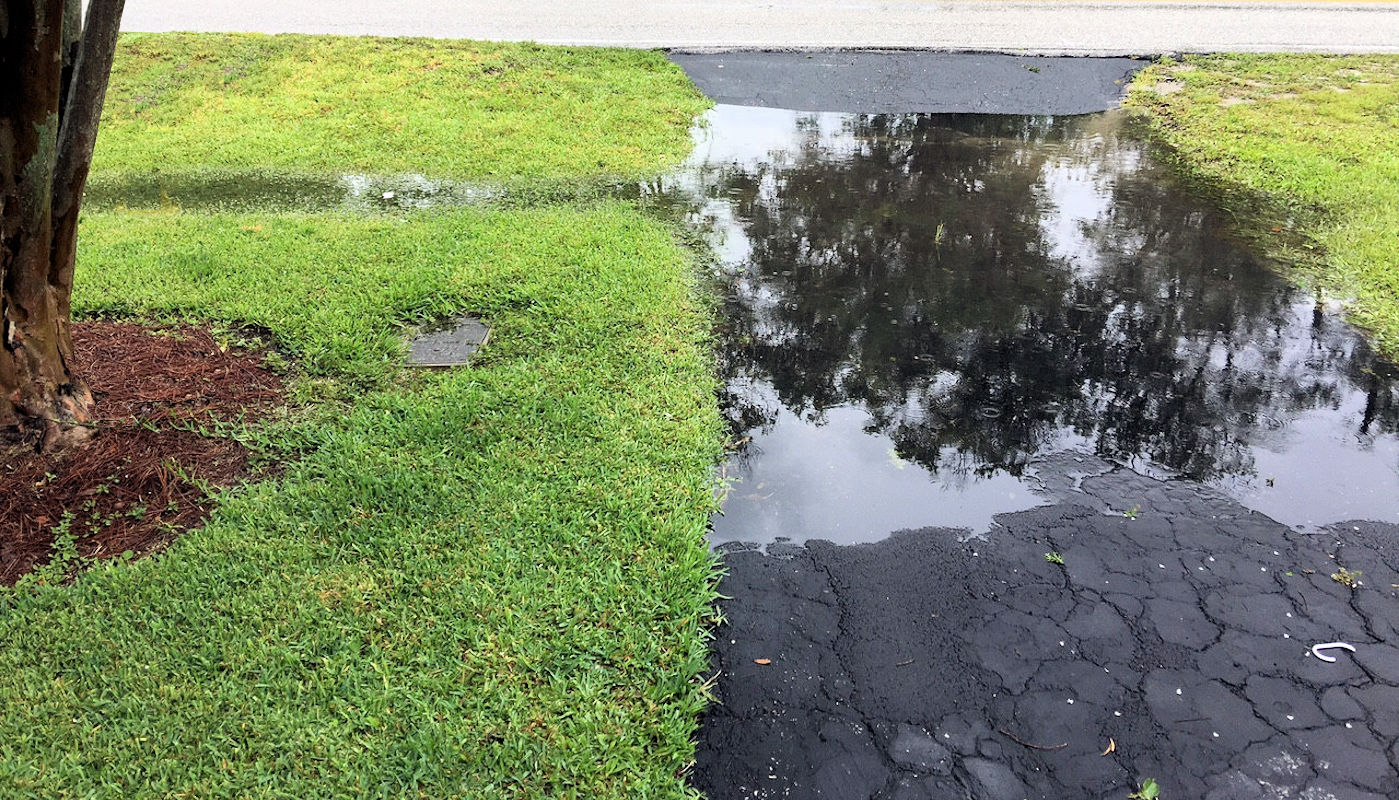
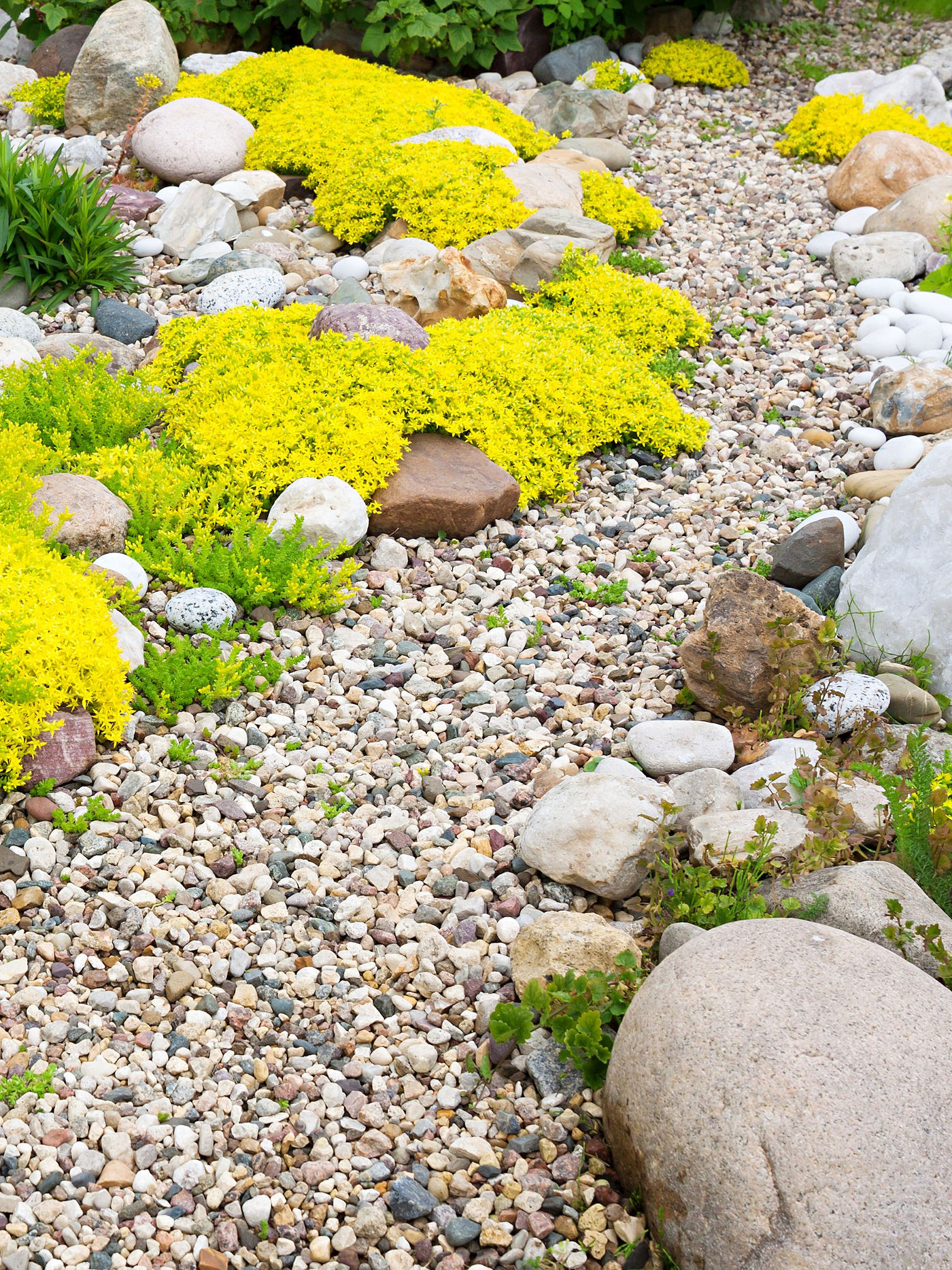
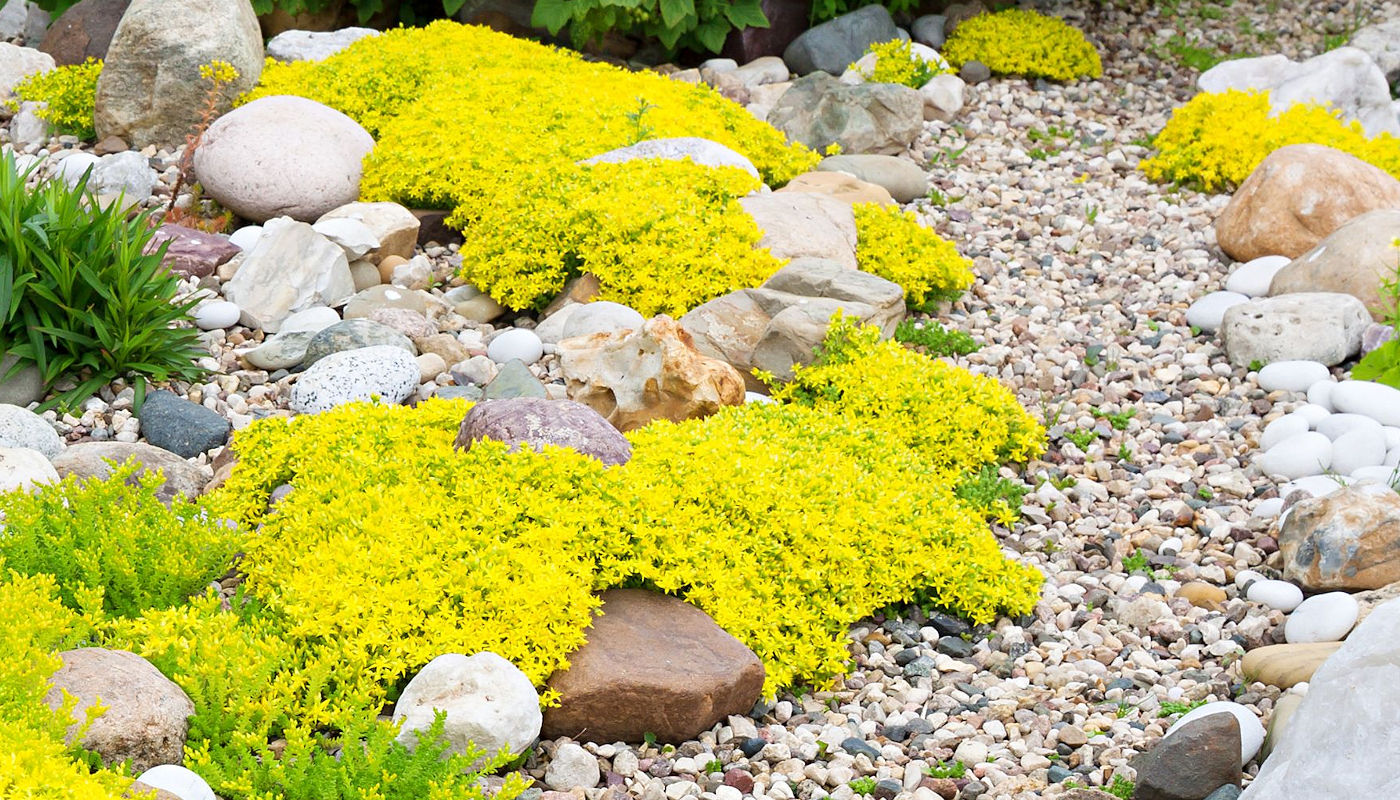
A dry creek bed with rocks can be an effective solution to certain drainage issues. A dry creek bed is a decorative landscaping feature that mimics the look of a natural creek or riverbed, but without the water. It is designed to channel water away from a particular area and direct it to a designated drainage point. The ‘bed’ is lined with rocks of various sizes, which help to slow down the flow of water and prevent erosion. The rocks also help to filter out debris and sediment, which can clog up drainage pipes and cause further problems.
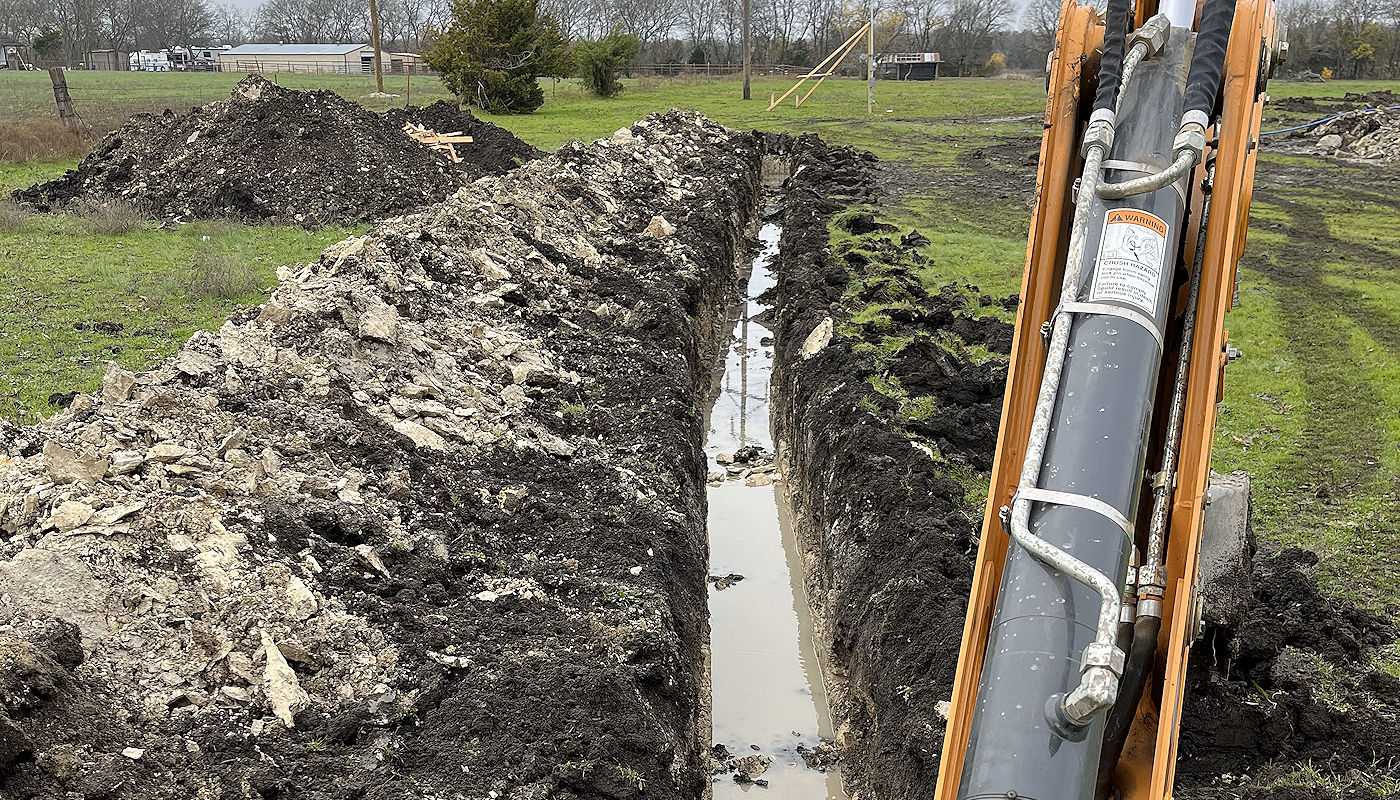
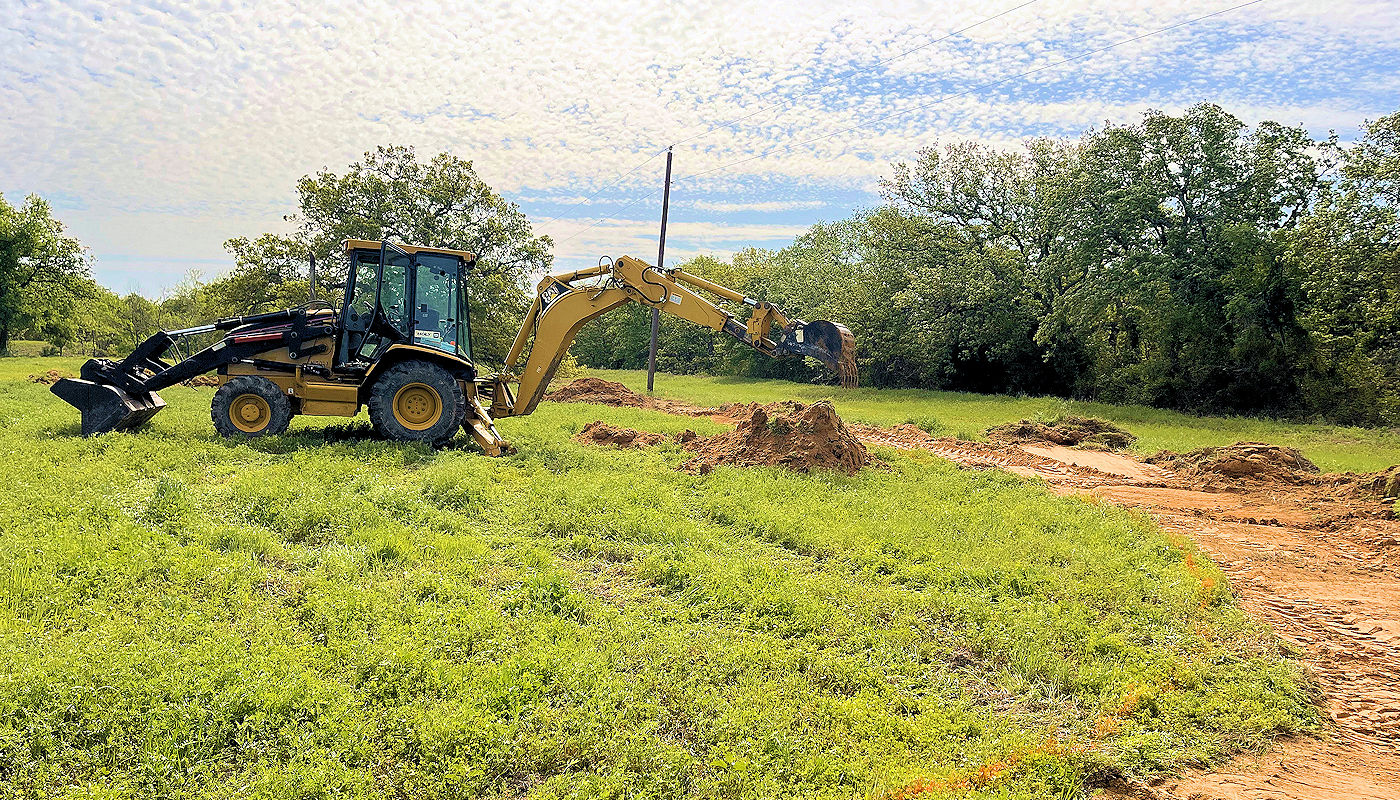
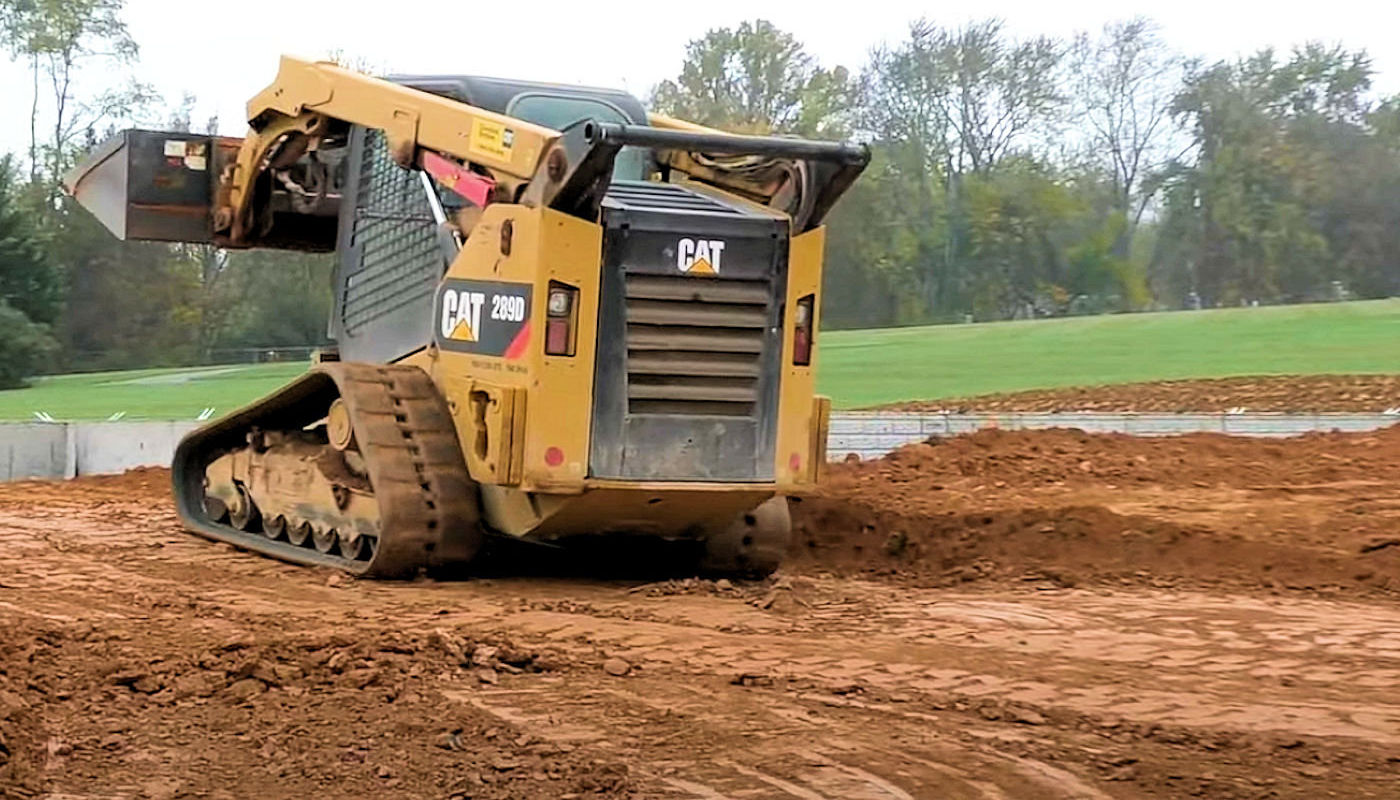
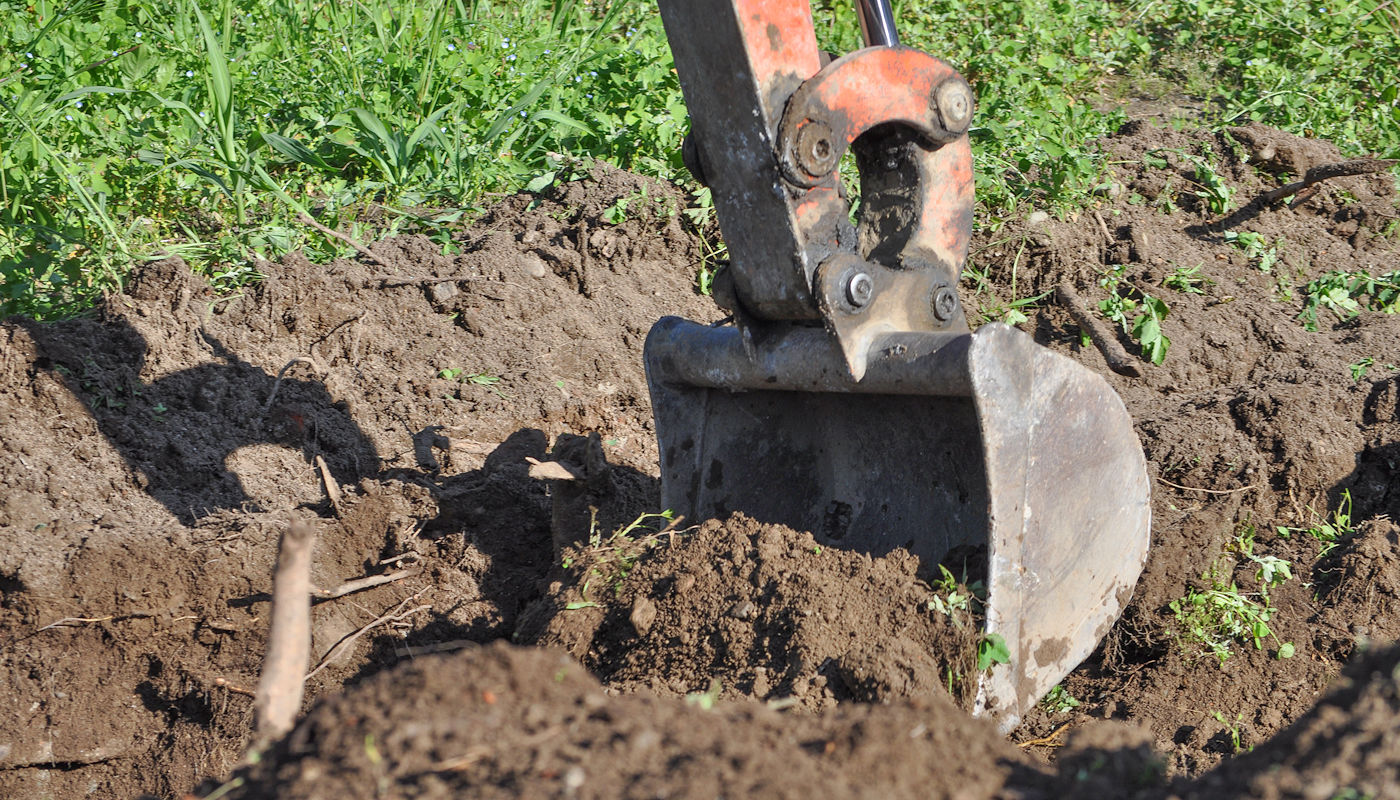
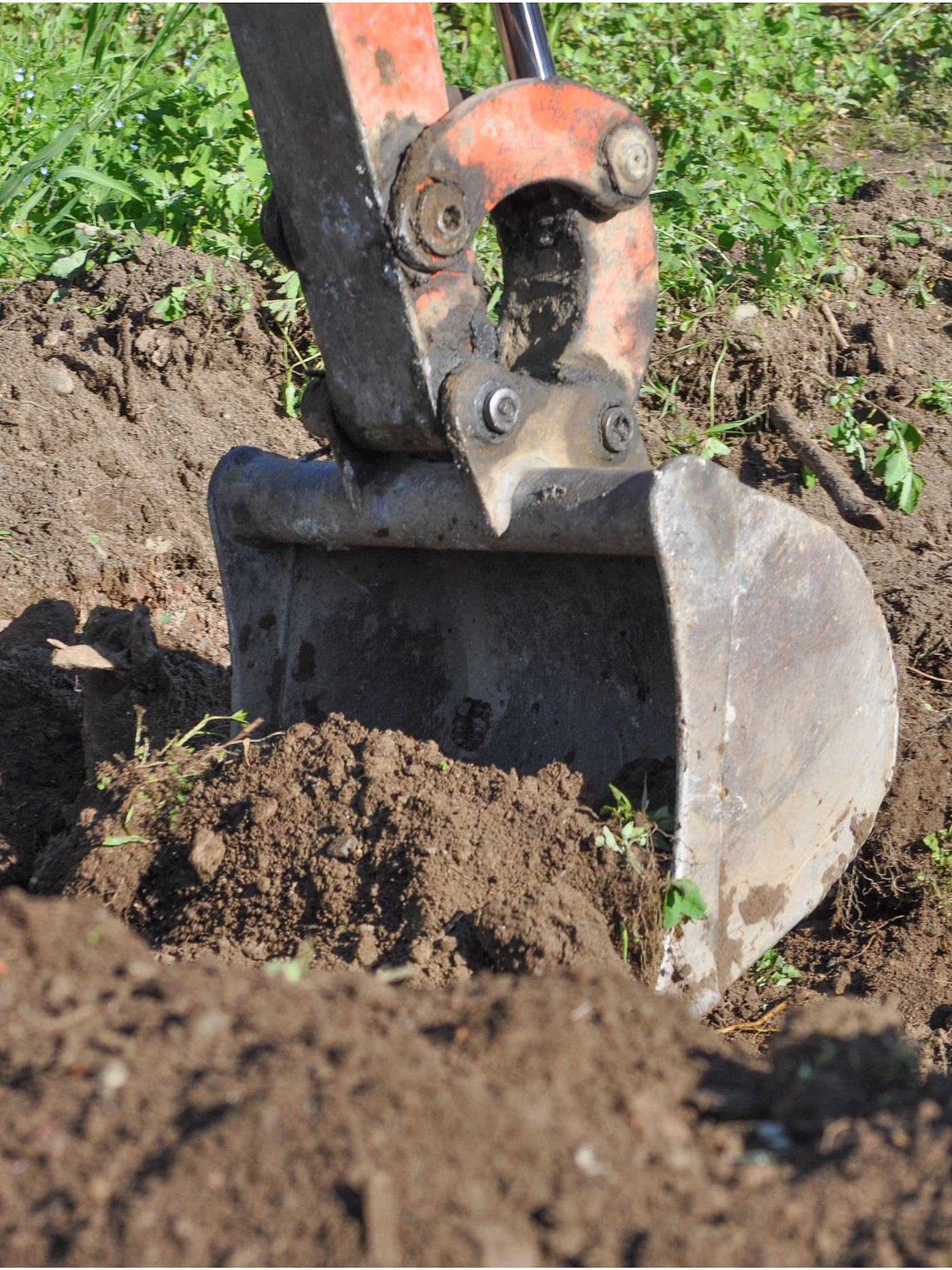
To create your dry creek or riverbed, you will need to excavate a shallow trench in the area where you want to direct the water. The trench should be lined with landscape fabric to prevent weeds from growing up through the rocks. Then, you can add a layer of gravel to the bottom of the trench to help with drainage. Finally, you can add the rocks to the trench, starting with the larger rocks at the bottom and working your way up to the smaller rocks at the top. You can also add plants and other landscaping features to it to make it more visually appealing.
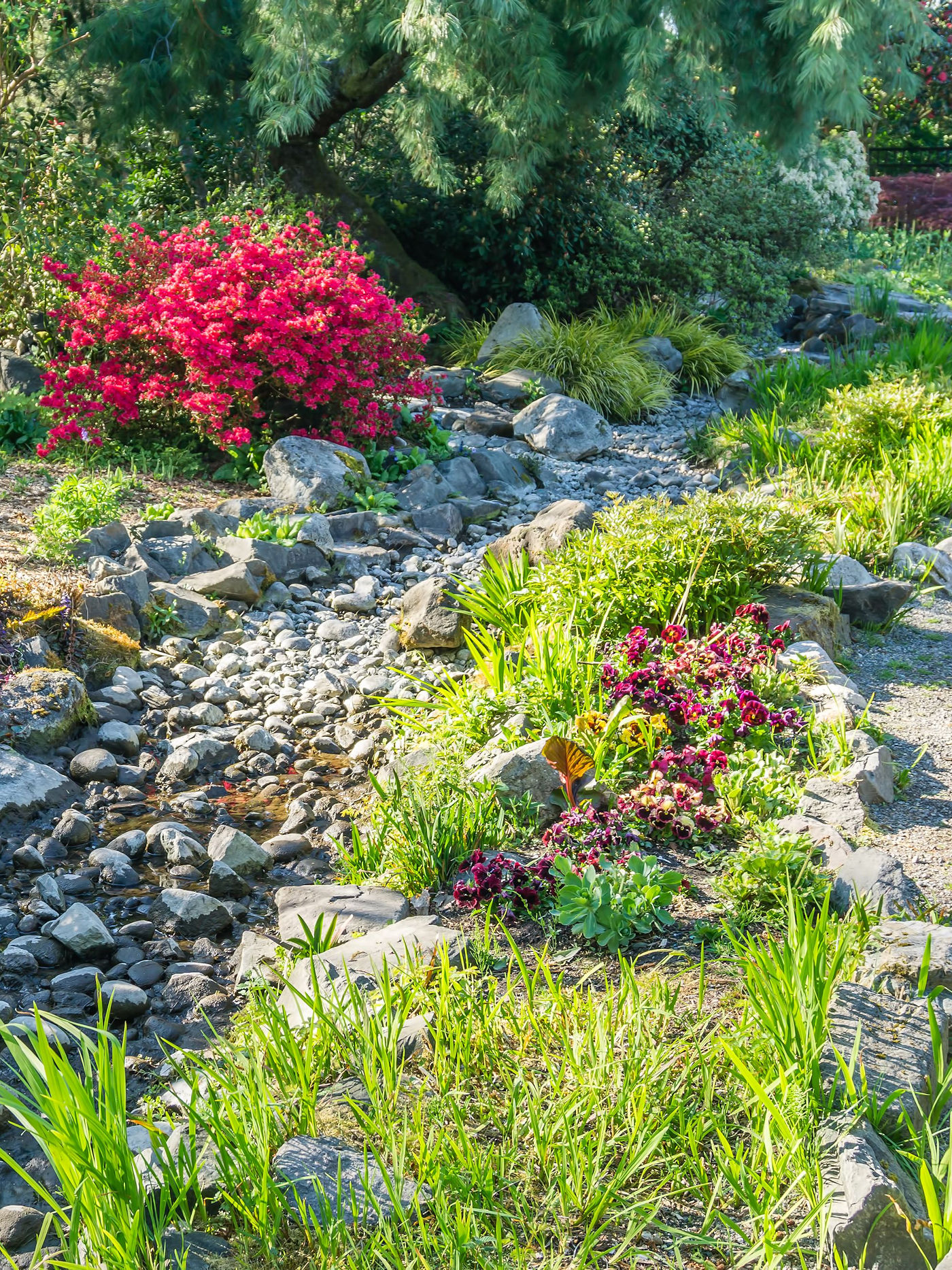
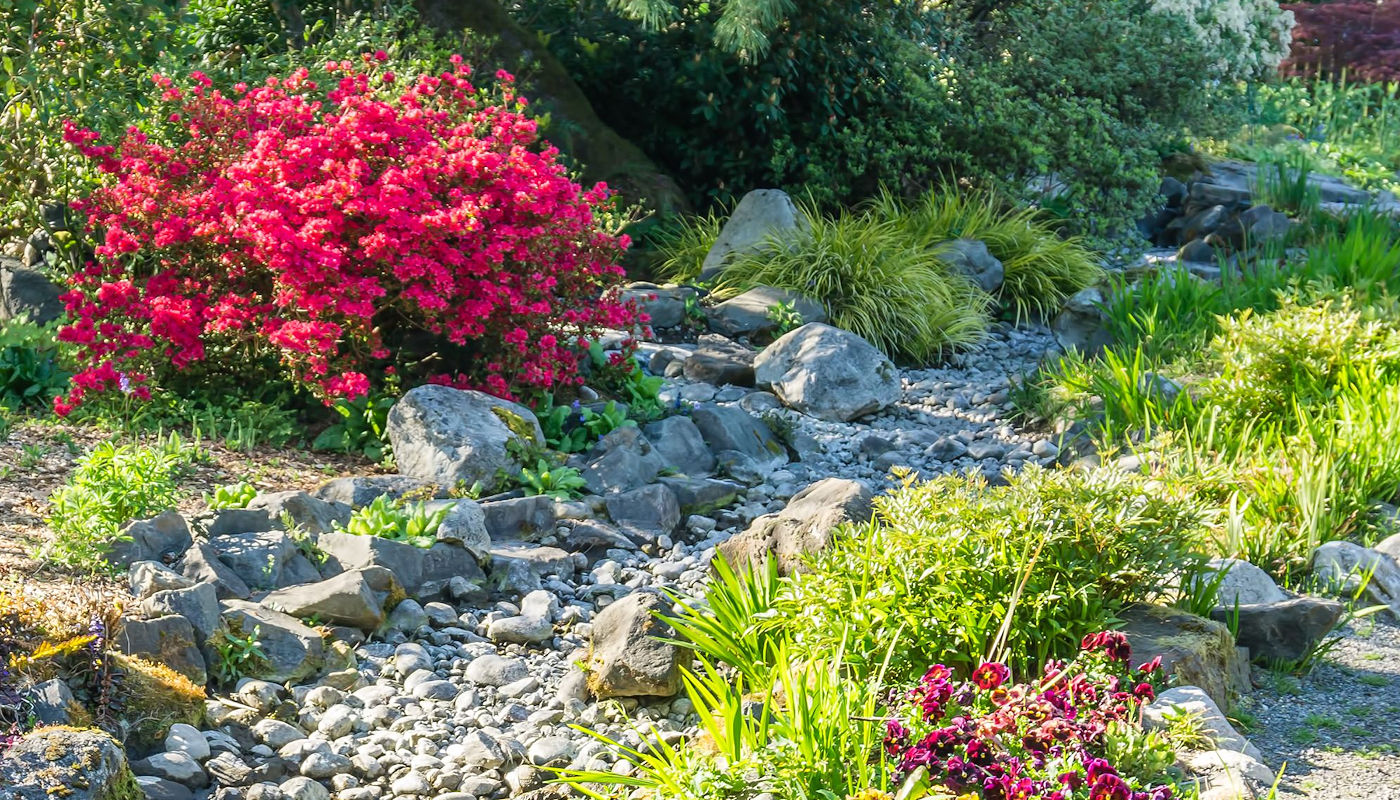
Dry Creek Beds: Drainage landscaping by many names.
Dry Creek Beds: Drainage landscaping by many names.
If you have been searching online for information about dry creek beds, dry stream beds, dry riverbeds, dry swales, river rock dry creek beds, xeriscape dry river or creek beds, dry stream (or stream bed) gardens, at some point you may have asked yourself if they aren’t all the same things. Each article seems a little different (more than a little in some cases), so initially you will keep looking for more information about a dry creek bed, until you realize (if you do) that the varying detail you find in an article about a dry stream bed or even a dry stream garden is all about the same thing (if you want plants).
ANSWER: These are all names for the same basic drainage feature. A dry creek bed is an open trench, shallow swale that will have various curve profiles to fit your circumstance or esthetic fancy; different types, sizes, and placements of stones or rocks; different widths and depths although generally 2:1 and shallow; use in conjunction with other stormwater storage features like a dry well or rain garden; and the incorporation of plants (or not) to create a “riparian” feel (simply the impression of plant life along a stream). If the name includes the word ‘garden’, they’re sure to include plants in the description, but the same may be true for other descriptions you find without it.
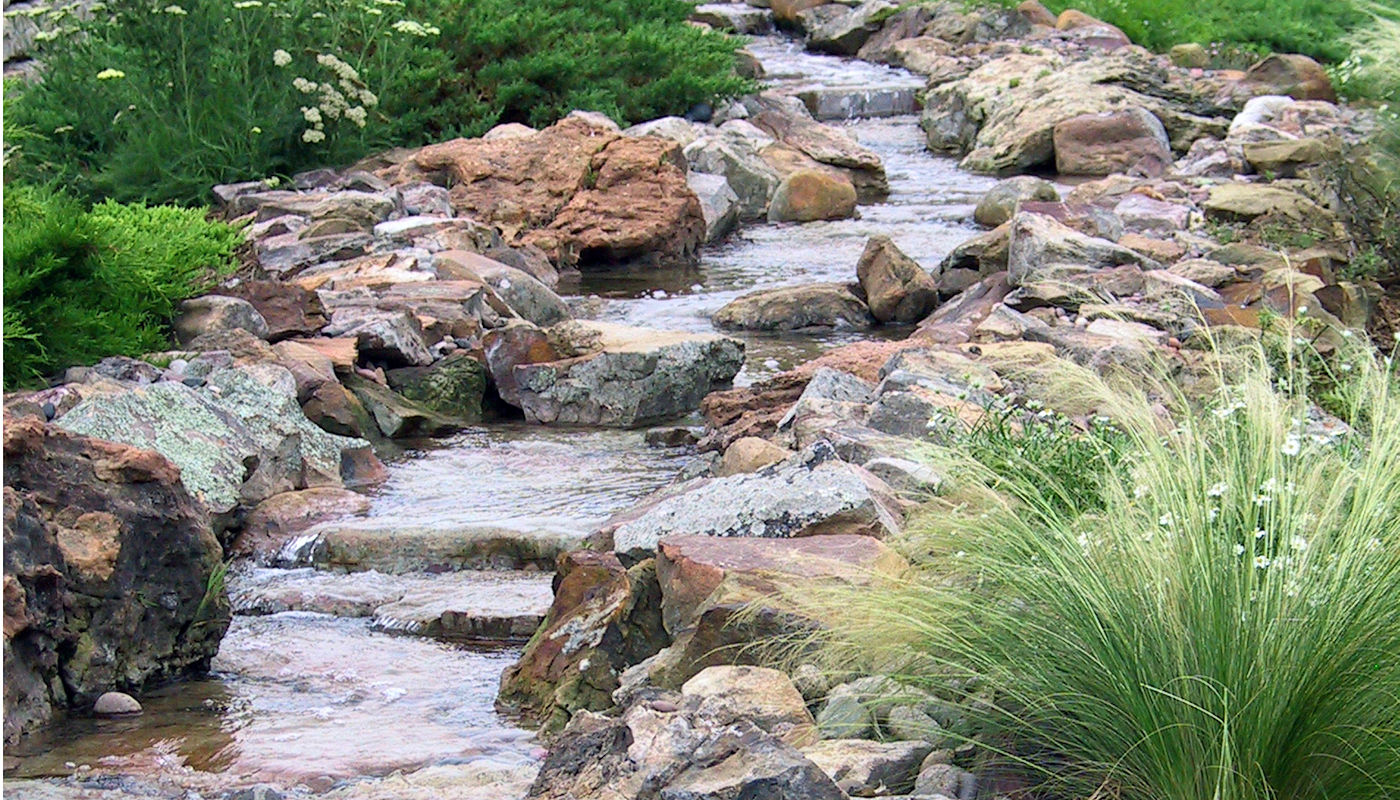
What are the Benefits of a Dry Creek Bed?
What are the Benefits
of a Dry Creek Bed?
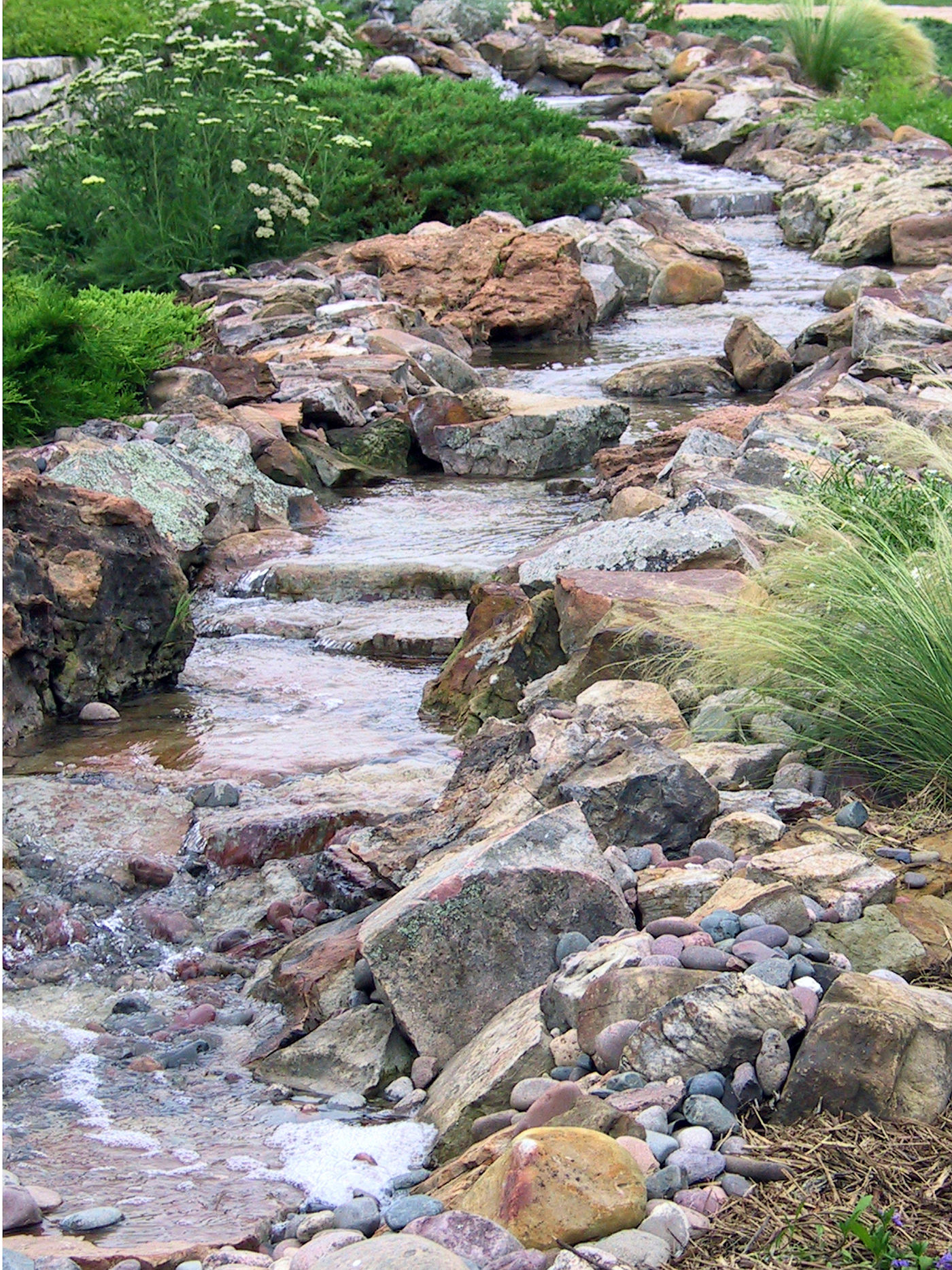
What are the steps in planning &
building a dry creek bed?
What are the steps in planning
& building a dry creek bed?
There are two types of liners that can be used to line a dry creek bed: water-permeable fabric and waterproof liner:
Water-permeable fabric: A geotextile fabric made of polypropylene or polyester that allows water to pass through it while preventing soil erosion and weed growth. Water-permeable fabric is a good choice for dry creek beds that are designed to handle moderate to heavy rainfall.
Waterproof liner: A synthetic material designed to prevent water from seeping through. Typically made of PVC or EPDM, it is used in dry creek beds that are designed to handle heavy rainfall or that are located near a building’s foundation. Waterproof liner is more expensive than water-permeable fabric, but it provides better protection against soil erosion and water damage.[5]
Where should water flowing through a dry creek bed be terminated?
Where should water flowing through a dry creek bed be terminated?
Dry Creek Bed Video Resources
Over 30 Dry Creek Bed Landscaping Ideas
From Garden Blossom
21 Front Yard Landscaping Ideas to Redirect Rainwater
From Decor Home Ideas
Plants that will thrive in a Dry Creek Bed
There are many plants that can thrive in a “Dry Stream Garden” (a Dry Creek Bed with plants), here are some general options to consider:
Dry Creek Bed Plants for Texas
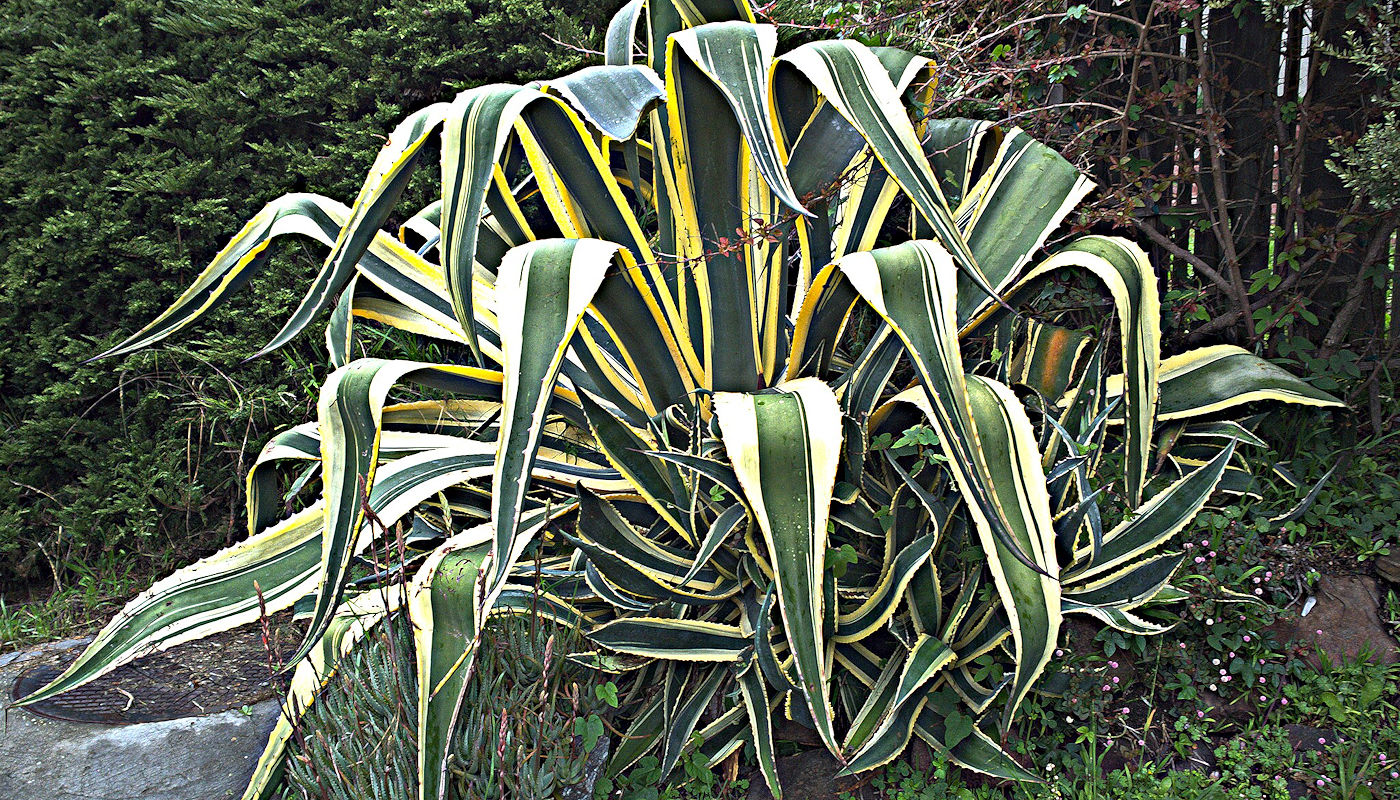
Agave americana, commonly known as the century plant,[5] maguey, or American aloe,[6] is a flowering plant species belonging to the family Asparagaceae. It is native to Mexico and the United States, specifically Texas. It has a spread around 1.8–3.0 m (6–10 ft) with gray-green leaves measuring 0.9–1.5 m (3–5 ft) in length. Each with a prickly margin and a heavy spike at the tip that can pierce deeply. Towards the end of its life, the plant produces a tall, branched stalk adorned with yellow blossoms, which can reach a height of 8–9 m (25–30 ft).
Photo Credit: John Rusk from Berkeley, CA, United States of America, CC BY 2.0, via Wikimedia Commons
Resources[1] Agave americana Wikipedia, Online resource.
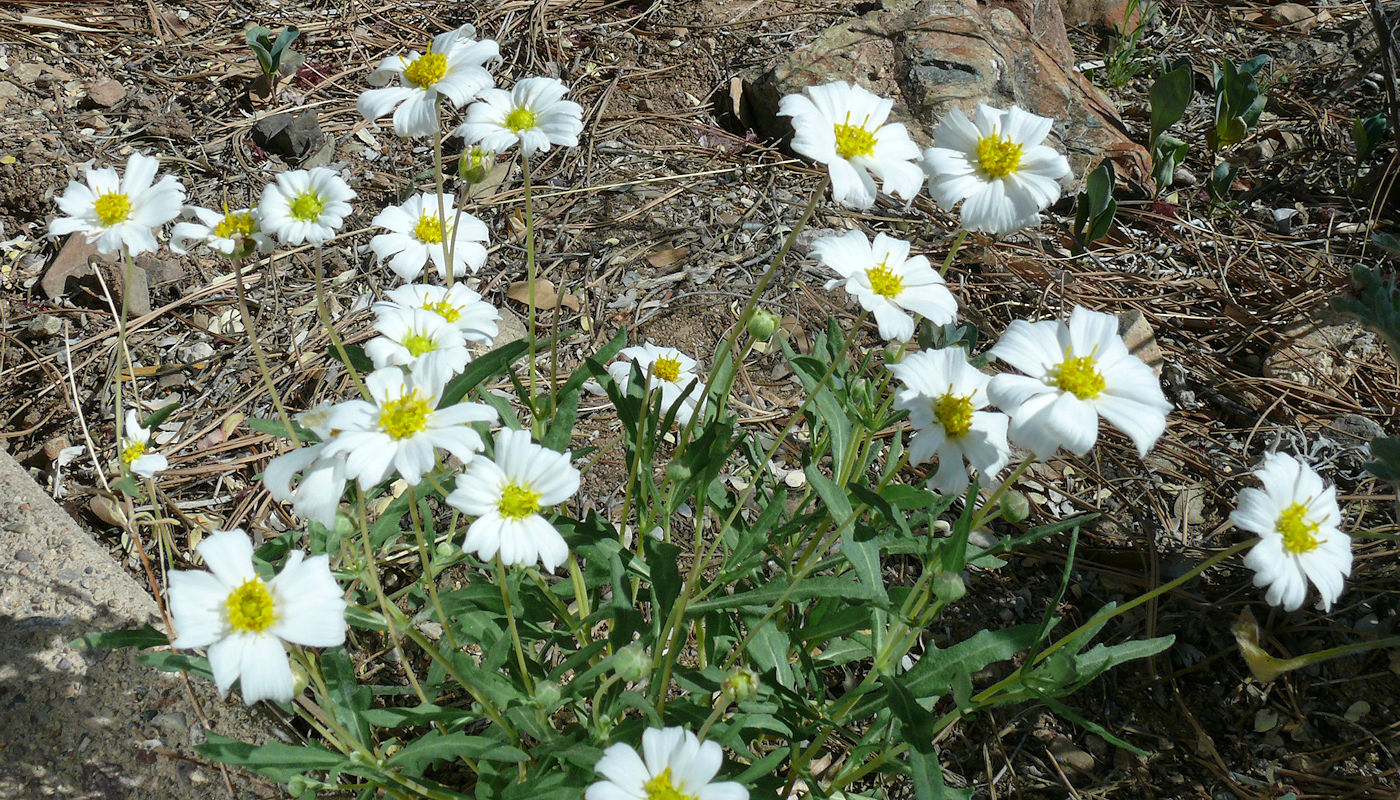
Blackfoot Daisy or Melampodium leucanthum is a sturdy perennial that grows up to 6-12 inches tall and 12-24 inches wide. It is native to Mexico and the southwestern United States, as far north as Colorado and Kansas Blackfoot Daisy is ideal for sunny rock gardens, borders, containers, and is a perfect species for xeric gardens. It is highly drought-tolerant and deer-resistant.
Blackfoot Daisy is hardy in USDA plant hardiness zones 4 through 11. It blooms from early spring to fall, providing months of color. The plant thrives in full sun or part shade in rocky, gravelly sandy, acidic, dry, well-drained soils. Good soil drainage is critical, and rich soil and abundant water may shorten its lifespan. Blackfoot Daisy is an excellent choice for beds and borders, dry creek beds, rock gardens, or prairies and meadows.[1]
Photo Credit: Sue in az, Public domain, via Wikimedia Commons
Resources[1] Melampodium leucanthum Wikipedia, Online resource.
Cedar sage is a hardy perennial that is drought-tolerant and produces red flowers.
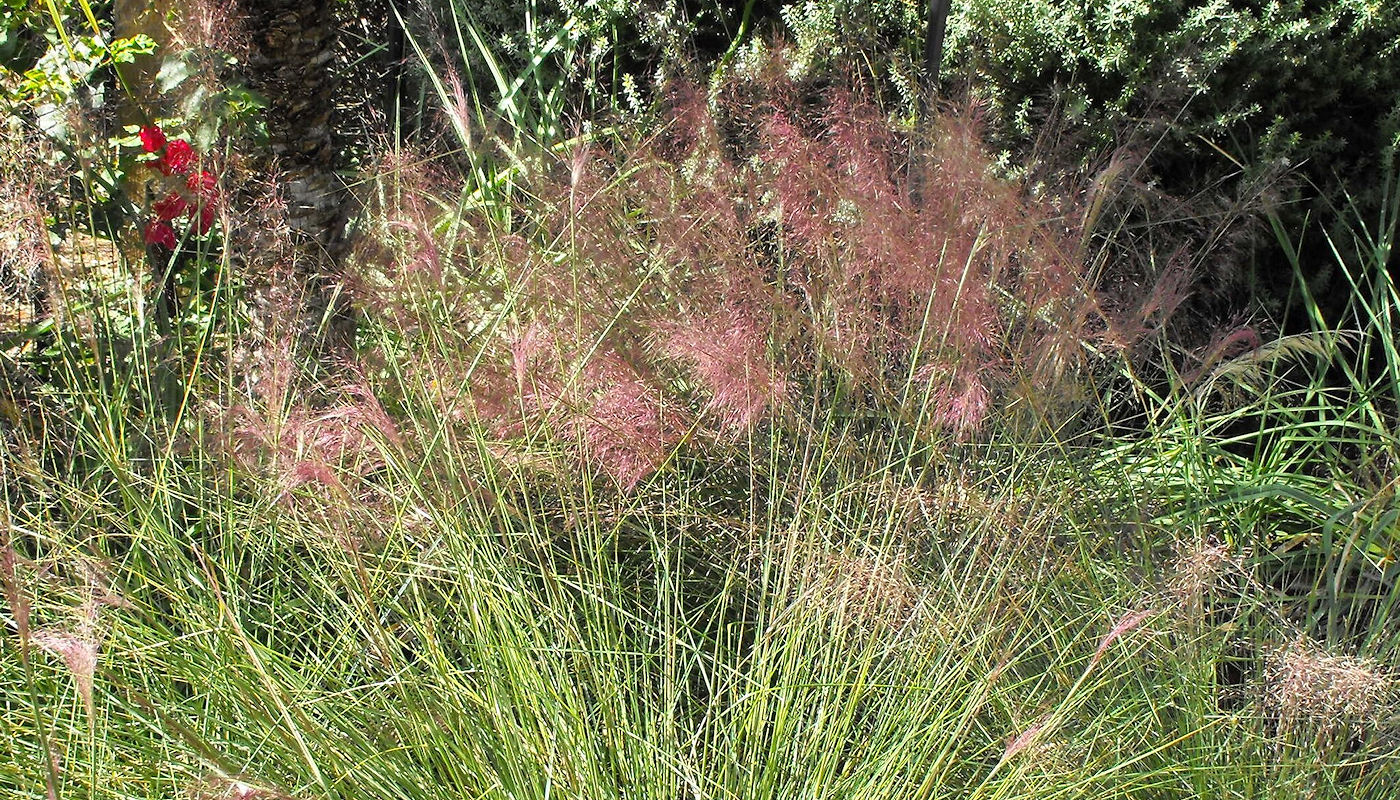
Gulf Muhly or Muhlenbergia capillaris is a perennial grass that can reach a height of 4 feet and a width of 3 feet. It is native to the central and eastern parts of the United States and south to Mexico and Guatemala. This grass is found naturally in clay or thin rocky soils, especially in those soils that were formerly burned and prairie-like. They are also found in open woodlands, savannas, dry woodlands, and the mountains around rock outcrops. Gulf Muhly is highly resistant to deer grazing and tolerates heat, humidity, drought, and poor soil [1][2]. It is adaptable to home or commercial landscapes and is perfect for the low-maintenance garden [1].
Gulf Muhly is hardy to zones 6 through 9. It blooms in the fall season, from late summer to fall. Muhly grass is a mid-range height ornamental grass and is best used as an intermediate or connecting plant in perennial borders, meadow, dry creek beds, and rain gardens.
Photo Credit: Stickpen, Public domain, via Wikimedia Commons

Resources[1] Muhlenbergia capillaris Wikipedia, Online resource.
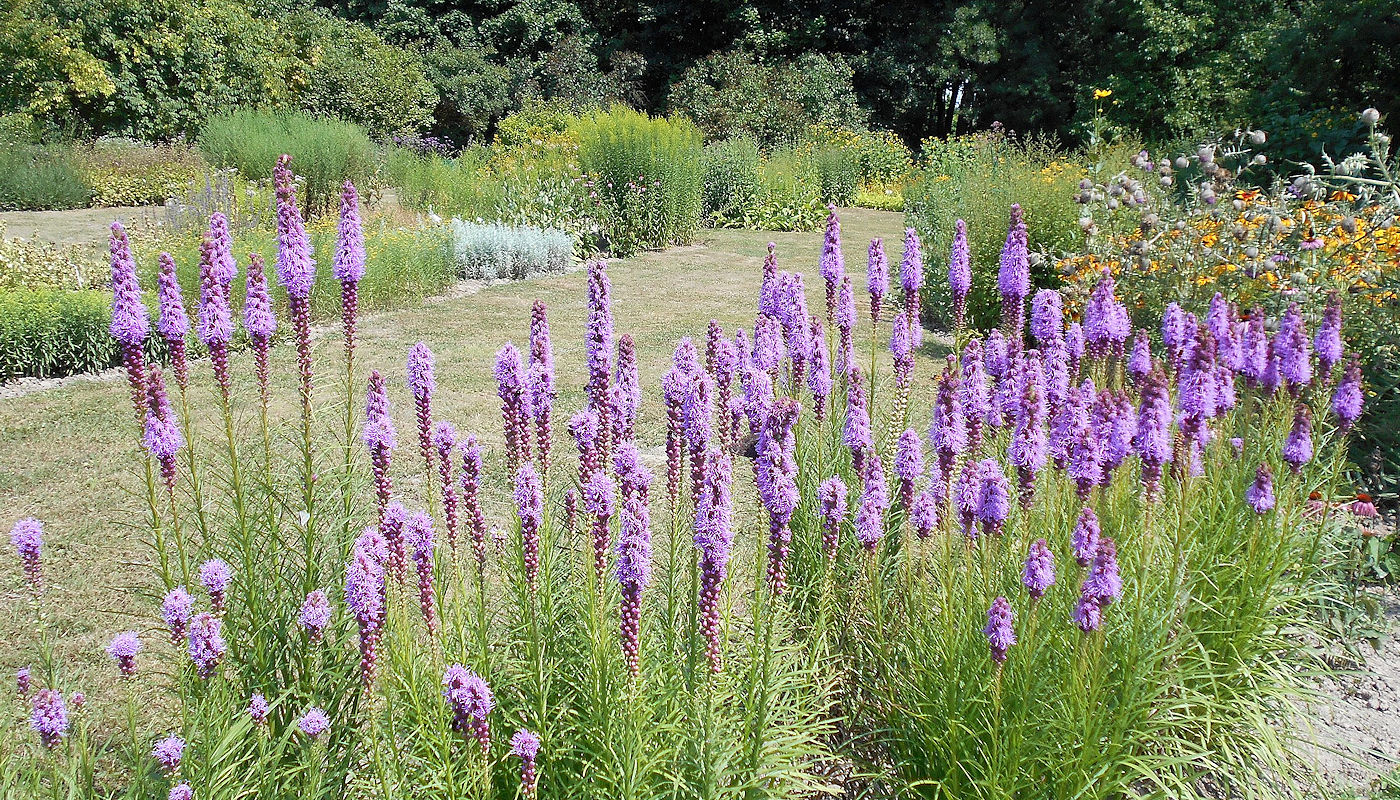
Liatris is a hardy perennial that is drought-tolerant and produces tall spikes of purple flowers resembling bottle brushes or feathers that grow 1–5 feet tall. They grow in hardiness zones 3-8, stretching from the Midwest to the East Coast, eastern and western Canada. They bloom in July through August or September, depending on where in their range they are located. Full sun is best and well-drained soil is preferred to prevent rot, though the plants do prefer moist soil. However, the plants do not tolerate wet soil in winter. The plants can tolerant some shade as well as drought but need regular watering during the first growing season to build strong roots.
Photo Credit: Salicyna, CC BY-SA 4.0, via Wikimedia Commons
Prairie verbena is a hardy perennial that is drought-tolerant and produces purple flowers.

Purple Cone Flower grows in USDA Growing Zones 3 to 9 and prefers full sun and medium to dry soils.
Photo Credit: H. Zell, CC BY-SA 3.0, via Wikimedia Commons
Salvi is a hardy perennial that is drought-tolerant and produces fragrant leaves and colorful flowers.
Texas Sedge is a grass-like plant that is drought-tolerant and requires little maintenance.
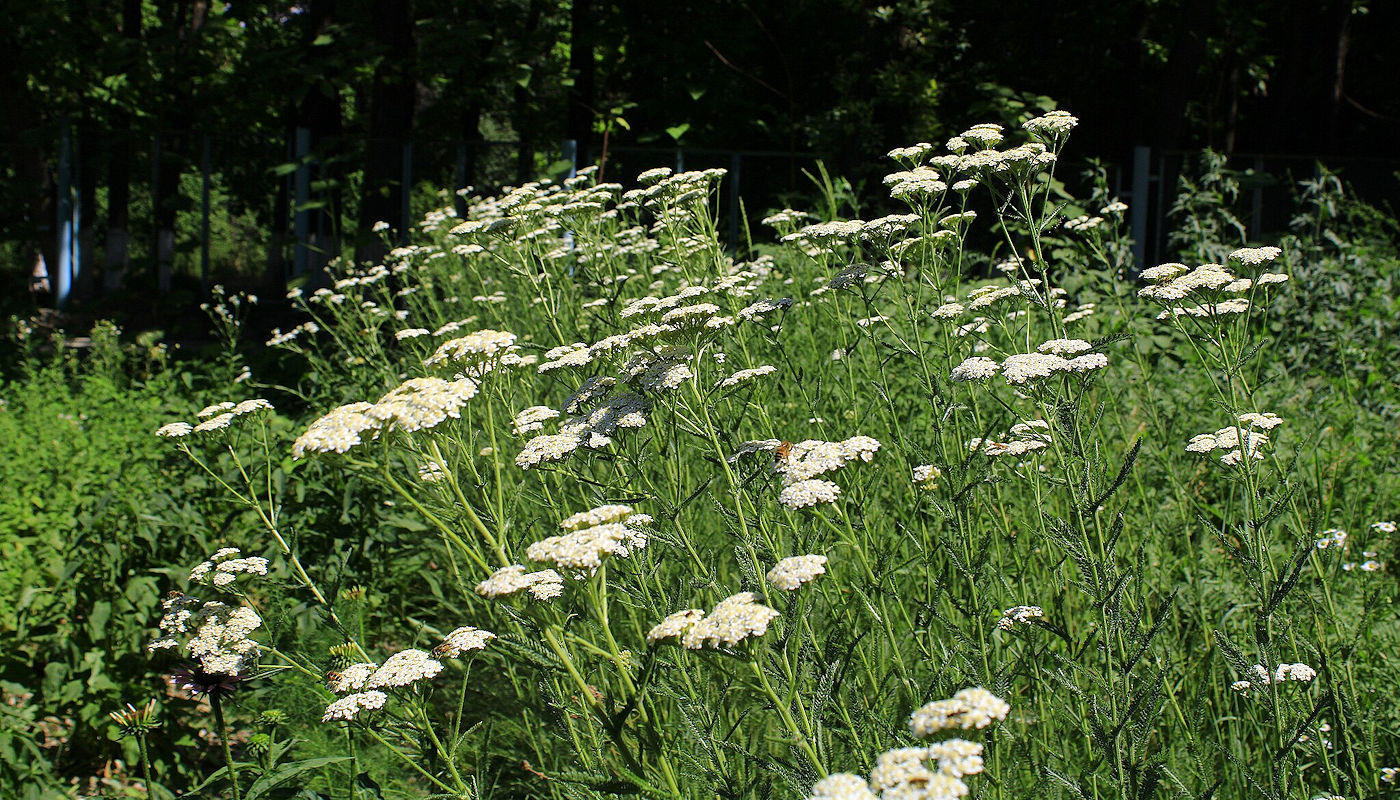
Yarrow (Achillea millefolium):
Yarrow grows in USDA Growing Zones 3 to 9 and prefers full sun and dry to medium, well-drained soil [1].
Humoyun Mehridinov, CC BY-SA 4.0, via Wikimedia Commons
Yucca is a hardy perennial that is drought-tolerant and produces tall spikes of white flowers. Texas has more than 30 species of yucca, many cultivated as ornamentals. The most common species of yucca that grows in Texas is Yucca torreyi, also known as Spanish dagger. Other species of yucca that grow in Texas include Yucca aloifolia (Spanish bayonet), Yucca constricta (Buckley yucca), and Yucca treculeana (Spanish dagger)
Dry Creek Bed Plants for Oklahoma
Resources