OSHA Soil Type Role in Trenching Excavation
Trench Digging Solutions from Texoma Excavation & Construction
Where is my water meter & water shut off valve located?
Trench Digging Solutions from Texoma Excavation & Construction
How does soil type change the open trench excavation process?
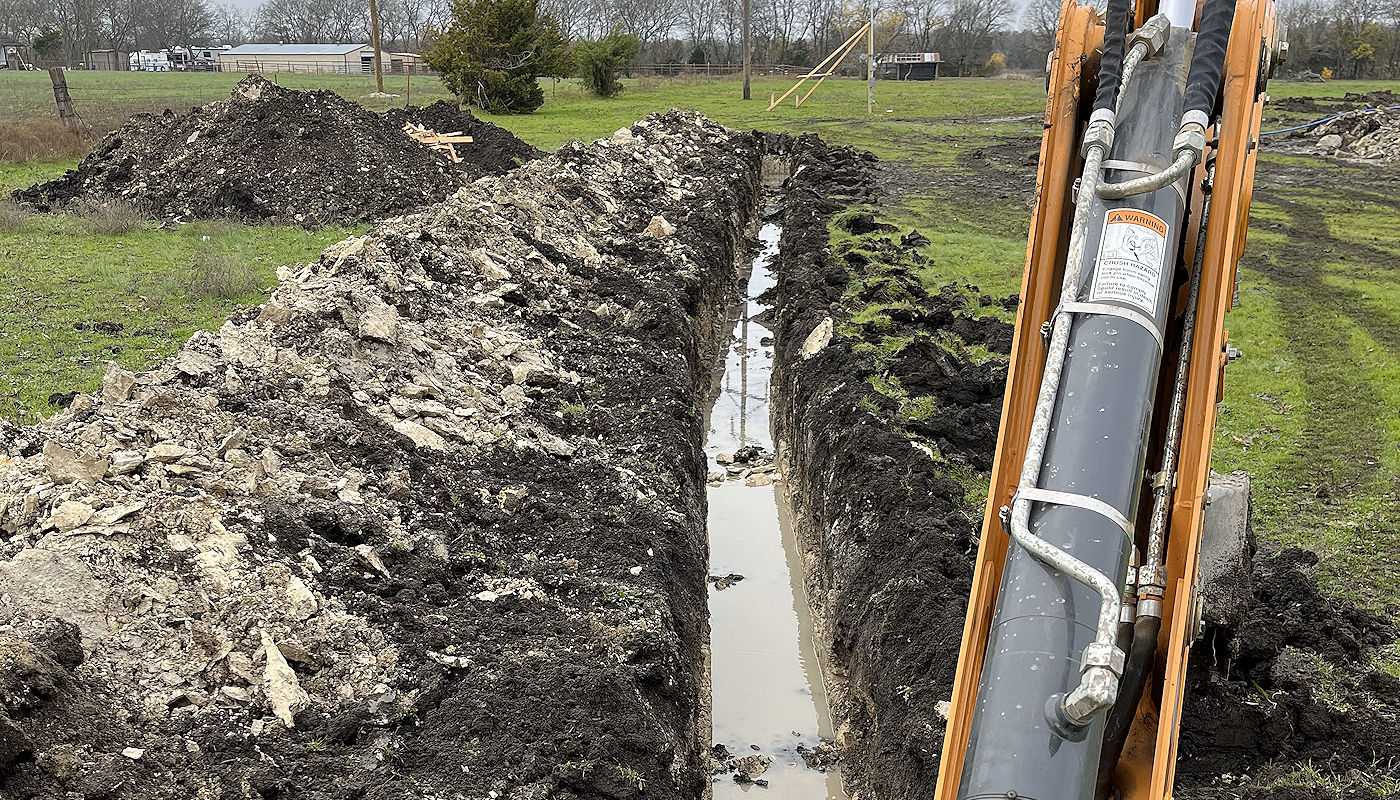
The soil type can make a significant difference in the open trench excavation process. The Occupational Safety and Health Administration (OSHA) classifies soils into three types: Type A, Type B, and Type C. Type A soil is the most stable soil to excavate, while Type C soil is the least stable. It’s important to note that a trench can be cut through more than one type of soil [1].
Type A Soil
Type A soil is cohesive and has a high unconfined compressive strength; 1.5 tons per square foot or greater. Examples of type A soil include clay, silty clay, sandy clay, and clay loam. Soil can not be classified as type A if it is fissured, if it has been previously disturbed, if it has water seeping through it, or if it is subject to vibration from sources such as heavy traffic or pile drivers. [6]


Type B Soil
Type B soil is cohesive and has often been cracked or disturbed, with pieces that don’t stick together as well as Type A soil. Type B soil has medium unconfined compressive strength; between 0.5 and 1.5 tons per square foot. Examples of Type B soil include angular gravel, silt, silt loam, and soils that are fissured or near sources of vibration, but could otherwise be Type A. [6]
Type C Soil
Type C soil is the least stable type of soil. Type C includes granular soils in which particles don’t stick together and cohesive soils with a low unconfined compressive strength; 0.5 tons per square foot or less. Examples of Type C soil include gravel, and sand. Because it is not stable, soil with water seeping through it is also automatically classified as Type C soil, regardless of its other characteristics. [6]
The stability of the soil determines the slope of the trench walls and the protective systems required to prevent cave-ins. For example, Type A soil requires a slope of 3/4:1 (53 degrees) or a protective system equivalent to a trench box or shield. Type B soil requires a slope of 1:1 (45 degrees) or a protective system equivalent to a trench box or shield. Type C soil requires a slope of 1 1/2:1 (34 degrees) or a protective system equivalent to a trench box or shield [1].
In summary, the soil type plays a crucial role in determining the slope of the trench walls and the protective systems required to prevent cave-ins during the open trench excavation process.
Resources
- 1Soil Classification | Transcript, Occupational Safety and Health. Online resource.
- 2SHA Technical Manual (OTM) – Section V: Chapter 2, Occupational Safety and Health. Online resource.
- 3Trench Excavation [2023], Specifier Australia. Online resource.
- 4What Is Open Cut Construction, MT Copeland. Online resource.
- 5A Guide to OSHA Excavations Standard, Occupational Safety and Health Division, N.C. Department of Labor. Online pdf resource.
- 6Soil Classification | Transcript, OSHA U.S. Department of Labor. Online resource.
Past Excavation Projects
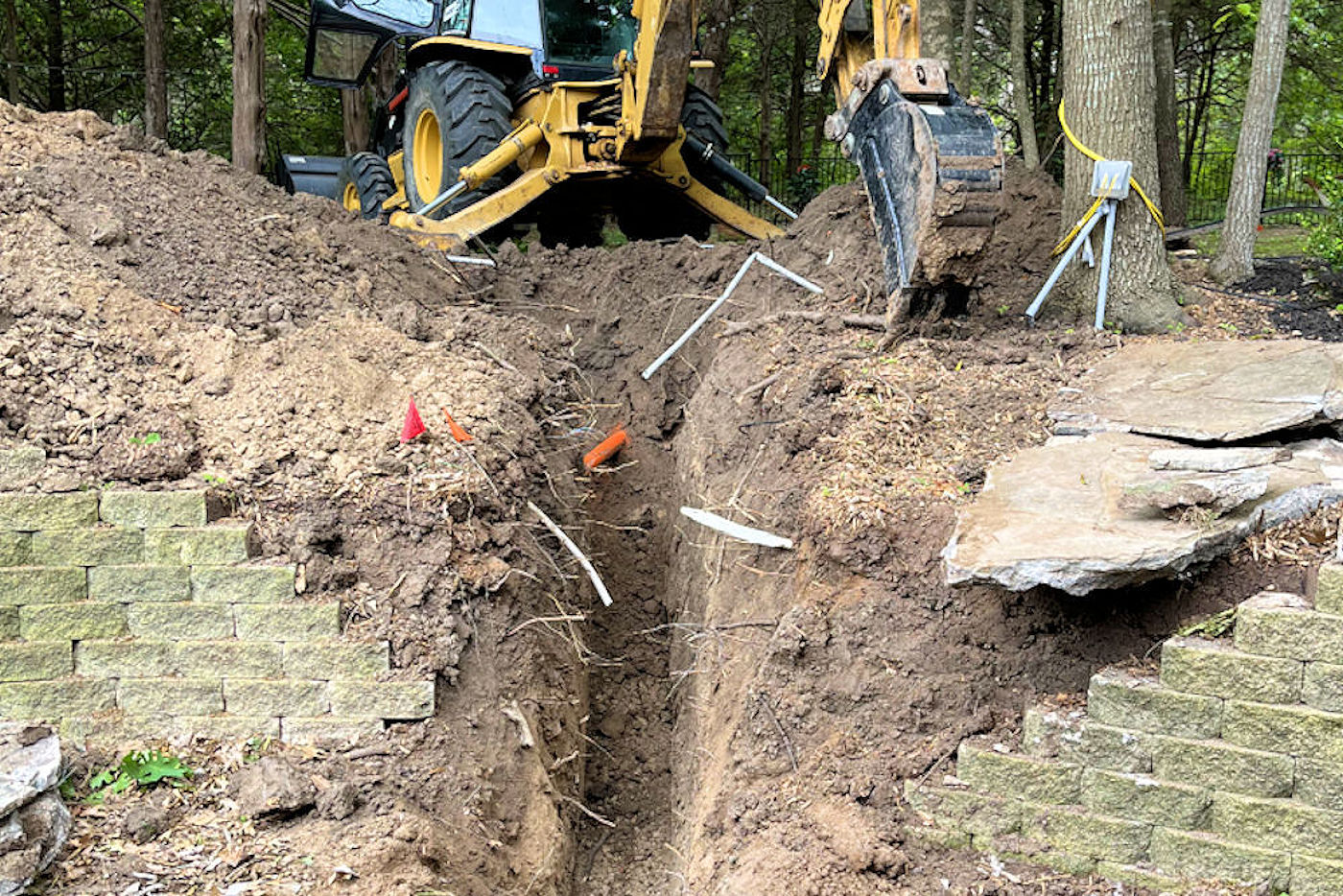
The above image shows Texoma Excavation & Construction digging a new power supply ditch and tying into the existing live power supply near Melissa, Texas. The paver stones were salvaged to be replaced. All the PVC, electrical conduit, phone lines, and small electrical lines that were destroyed were anticipated.

Pond building is a complex process that requires careful planning and execution. After all the planning, the first construction step is excavation of the area where the pond will be located. The pond excavation work shown above was near Montague, Texas. When this pond is full, it will be 7′ 2″ deep at its deepest point.
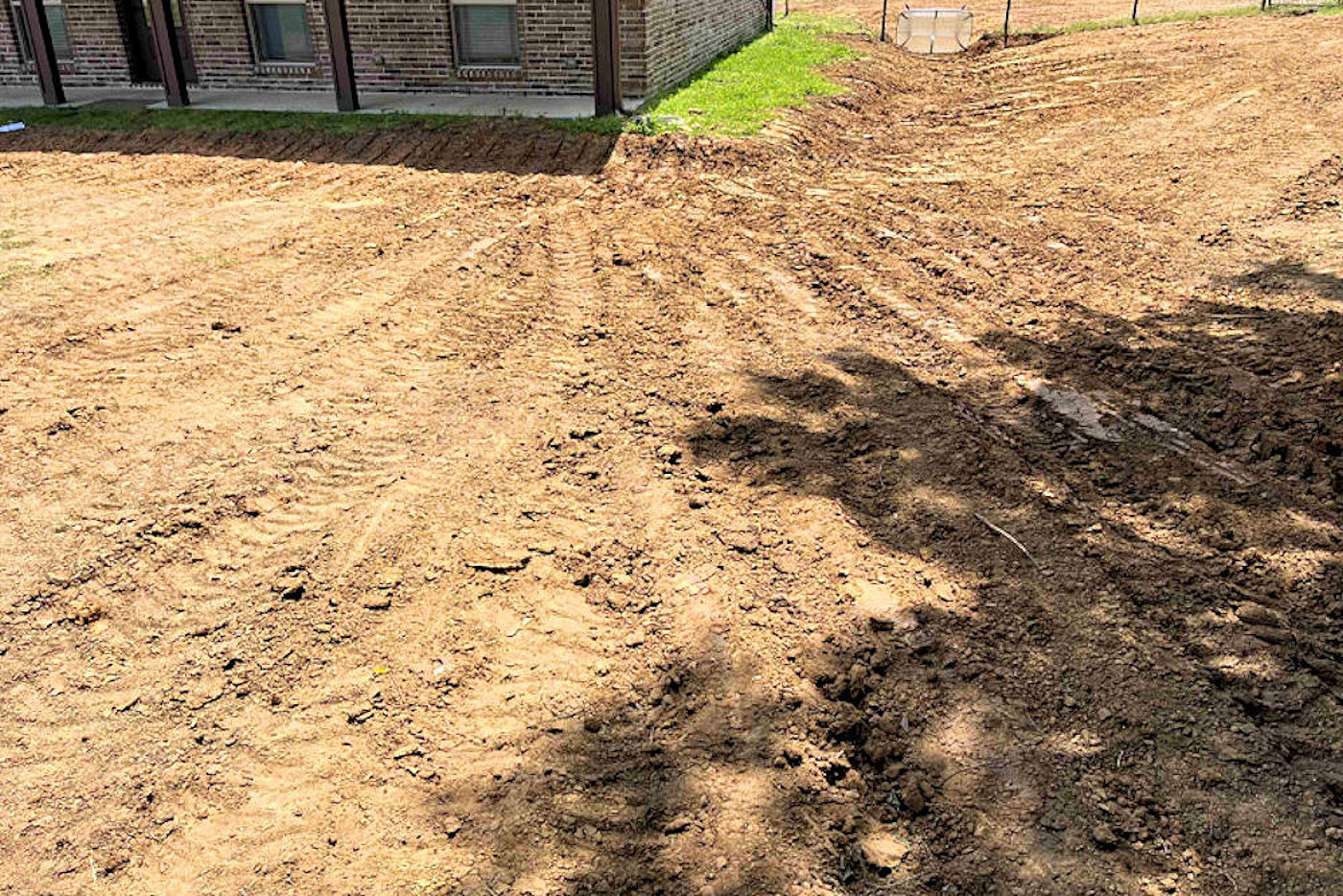
Residential drainage excavation work done near Denison, Texas. This client had some significant drainage problems during periods of high-volume runoff and tried to excavate a ditch to channel water away from his house. We were hired to polish the existing ditch and spread some grass seed.